PLain
When COP31 opened in Antalya on 9 November, climate finance and the formal agenda were among the first issues to draw attention. Negotiations continued into the early hours as countries discussed how finance-related matters should be reflected in the official agenda.
While these discussions may appear procedural, they address a fundamental question: how can international climate commitments translate into meaningful action at national and local levels?
plain
The finance divide
Access to climate finance remains an important issue for developing countries, particularly those facing significant climate risks and limited financial resources. Many are calling for funding that is more accessible, predictable and responsive to their adaptation and sustainable development needs.
PLain
Developed countries, meanwhile, face discussions around existing financial commitments, future contributions and the mechanisms through which resources should be mobilised.
PLain
Beyond the negotiations, access to funding remains a practical challenge. Complex application processes, institutional requirements and multiple funding intermediaries can make it difficult for smaller organisations and community-based initiatives to secure the resources they need. The question is not only how much finance is mobilised, but also how effectively it reaches the communities and ecosystems it is intended to support.
PLain
Article 6: From Framework to Implementation
Article 6 of the Paris Agreement provides a framework for voluntary international cooperation, including carbon market mechanisms and non-market approaches. With key implementation rules agreed in 2024, attention is increasingly focused on how these mechanisms operate in practice.
PLain
The COP31 Presidency has highlighted the potential of carbon markets to mobilise additional resources for developing economies. However, their effectiveness will depend on robust accounting, credible verification, environmental integrity and meaningful safeguards for local communities. Carbon markets offer one potential source of climate finance, but they are not a substitute for all forms of climate funding. Their contribution should be assessed through measurable emissions outcomes and the benefits they deliver to the people and ecosystems involved.
PLain
Ultimately, the integrity of any mechanism depends on transparency, accountability and the fair distribution of benefits.
PLain
PLai
Why the Leaders' Summit Matters
The Antalya Leaders' Summit, taking place on 11 and 12 November, brings together heads of state and government to discuss climate priorities and international cooperation. High-level discussions help establish political direction and identify areas for collaboration. However, translating these commitments into outcomes requires continued engagement from governments, institutions, businesses, civil society, researchers and local communities.
As finance and trade feature in the wider COP31 discussions, the relationship between international commitments and practical implementation remains an important consideration.
Where Nature Comes In
Nature is an increasingly important part of the climate finance conversation.
PLain
Forests, wetlands, mangroves and other ecosystems contribute to climate resilience, biodiversity protection, water security and the livelihoods of communities. Protecting and restoring these ecosystems is therefore closely connected to broader climate and development objectives. The COP30 Presidency called for a roadmap to halt and reverse deforestation to be presented at COP31. Meanwhile, estimates of global forest investment highlight the scale of resources already flowing into this area, as well as the need to examine how effectively those resources support long-term restoration.
PLain
For restoration efforts to endure, financing needs to be predictable, implementation should involve local communities, and progress must be monitored through credible and transparent measures.
PLain
Nature-based solutions should not be viewed simply as carbon projects. Their value also lies in the ecosystems they protect, the livelihoods they support and the resilience they help build.
PLain
GEAF's Perspective: From Advocacy to Transition
At the Green Earth Action Foundation (GEAF), our ACT initiative follows a three-stage approach: Advocacy, Collaboration and Transition.
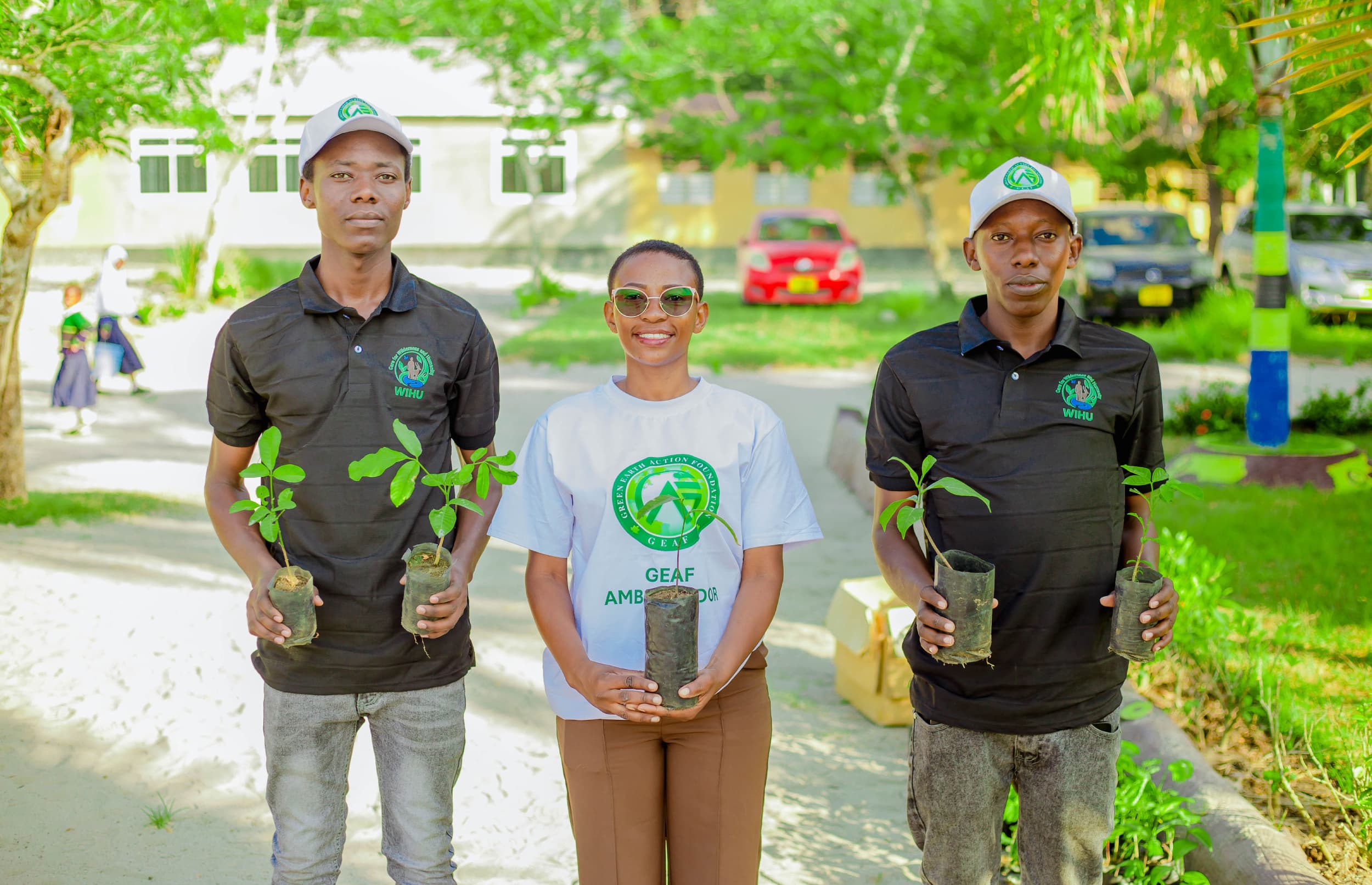
Through our Roots of Hope reforestation series, we have highlighted community-led restoration initiatives in Madagascar, Tanzania, Timor-Leste, Cameroon and Bangladesh.
These experiences reflect the importance of local participation, long-term engagement and context-specific approaches to environmental action.
ACT III – Transition builds on this foundation by exploring how advocacy and collaboration can develop into sustained, measurable action.
PLain
Through our GEAF Ambassador and Facilitator network, working across multiple countries, we aim to bring diverse perspectives into environmental discussions. Our involvement in the Children and Youth Pavilion Steering Committee for COP31 also provides an opportunity to contribute to conversations on youth participation and environmental action.
PLain
For GEAF, the climate finance discussion is closely connected to a broader question: how can global commitments create opportunities for communities to protect, restore and sustainably manage their natural environments?
Looking Beyond the Negotiations
As COP31 continues through 20 November, discussions on finance, implementation and international cooperation will remain central to the climate agenda.
- The outcomes will matter, but so will the processes that follow: how resources are allocated, how projects are implemented, how communities participate and how progress is measured.
- Climate action requires more than commitments. It requires accessible resources, transparent processes, meaningful participation and sustained cooperation.
- The transition from ambition to implementation is a shared responsibility, and nature must remain an essential part of that conversation.
PLain
Restoring Land. Sustaining Life. Inspiring Hope.