Nov 12, 2026
Roots of Hope: Restoring Ecosystems Through Community Action
GEAF
Sep 29, 2026
6 min read
Green Earth Action Foundation | October 2026
.
Land degradation is often gradual, but its consequences are far-reaching. As forests disappear, soils lose fertility and ecosystems become less resilient, the effects extend well beyond the natural environment. Food security, water availability, biodiversity, and the livelihoods of millions of people are all affected.
.
According to the United Nations Environment Programme (UNEP), land degradation affects approximately 3.2 billion people worldwide — around 40% of the global population. The challenge is expected to intensify as climate change, drought and unsustainable land-use practices place additional pressure on already vulnerable ecosystems. The Food and Agriculture Organization of the United Nations (FAO) has also reported that nearly 1.4 billion hectares of land are affected by soil salinity, with a further one billion hectares at risk.
.
These figures underline a fundamental reality: restoring nature is not simply an environmental objective. It is essential to protecting food systems, strengthening climate resilience and supporting sustainable livelihoods.
.
Restoration is more than planting trees
The United Nations Decade on Ecosystem Restoration, covering 2021–2030, calls for global action to prevent, halt and reverse ecosystem degradation. Its approach recognises that restoration extends across forests, agricultural land, freshwater systems, wetlands, coastal environments and other ecosystems on which people and nature depend.
.
Yet restoration cannot be measured by the number of trees planted or hectares covered alone. The long-term success of an initiative depends on whether ecological functions recover, whether appropriate species are selected, whether local communities are involved and whether the restored ecosystem can be maintained over time.
.
As Inonge Guillemin, Doctoral Researcher at the United Nations University Institute for Integrated Management of Material Fluxes and of Resources (UNU-FLORES), emphasised during GEAF’s Climate Action Conversations webinar:
“It should ask whether ecological function improved, and whether communities can manage the landscape over the long term.”
.
This perspective places ecological recovery and community stewardship at the centre of restoration. It also highlights the importance of securing appropriate financing, strengthening local governance and recognising the knowledge of Indigenous Peoples and local communities, whose livelihoods and experience are closely connected to the landscapes they manage.
.
ACT for Nature: From dialogue to local action
Against this backdrop, the Green Earth Action Foundation (GEAF) launched ACT for Nature, a three-month initiative structured around three complementary pillars: Advocacy, Collaboration and Transition.
.
The initiative reflects the need to connect international environmental discussions with practical, locally adapted responses. Its approach also aligns with the convergence of three major international environmental processes in 2026: the seventeenth session of the United Nations Convention to Combat Desertification (UNCCD COP17) in Mongolia, the seventeenth meeting of the Convention on Biological Diversity (CBD COP17) in Armenia, and the thirty-first United Nations Climate Change Conference (UNFCCC COP31) in Türkiye.
.
ACT I — Advocacy: Understanding the challenge
On 29 September 2026, GEAF’s Climate Action Conversations series hosted its seventh episode, How to Restore Degraded Ecosystems? The webinar brought together researchers, environmental practitioners and GEAF Ambassadors to examine the drivers of ecosystem degradation and the conditions necessary for effective restoration.
.
The discussion explored soil health, drought resilience, community participation, land governance, financing and the need for restoration approaches adapted to local ecological and social realities. Contributions from experts associated with the United Nations University, the Food and Agriculture Organization of the United Nations and the University of British Columbia helped connect scientific knowledge, policy considerations and practical experience. Its central message was that restoration must be treated as a long-term process, supported by sound governance, adequate financing, monitoring and meaningful community participation.
.
ACT II — Roots of Hope: Reforestation across five countries
In October, ACT for Nature moves into its Collaboration phase through the Roots of Hope, Reforestation Series. Across five countries — Timor-Leste, Bangladesh, Cameroon, the United Republic of Tanzania and Madagascar — GEAF Ambassadors are leading locally adapted activities that connect environmental education with practical restoration.
.
In Timor-Leste, the initiative focuses on mangrove planting in Hera, Dili, bringing together young volunteers and community members to support coastal ecosystem protection.
.
In Bangladesh, a community-based activity in the Sundarbans connects mangrove planting with environmental awareness and the longer-term Community-Based Ecological Mangrove Restoration approach led through SESDO’s Mangroves4Life initiative.
.
In Cameroon, the initiative combines tree planting, environmental drawing and the distribution of seedlings for children and young people to plant at home with their families, extending environmental learning beyond the school environment.
.
In Tanzania, a youth-led reforestation activity in Ilala, Dar es Salaam, combines tree planting with guidance on maintenance and long-term care. The objective is to strengthen understanding of the role trees can play in improving urban environments, supporting biodiversity and enhancing climate resilience.
.
In Madagascar, the initiative Make Green Again Madagascar focuses on community-based ecosystem restoration in the Fianarantsoa region, with a planned target of planting 1,000 native and locally adapted trees alongside environmental awareness activities.
.
Although the ecological contexts differ, the activities share a common principle: lasting restoration depends on community engagement, locally appropriate approaches and continued care beyond the initial planting event.
.
ACT III — Transition: Bringing local perspectives into global dialogue
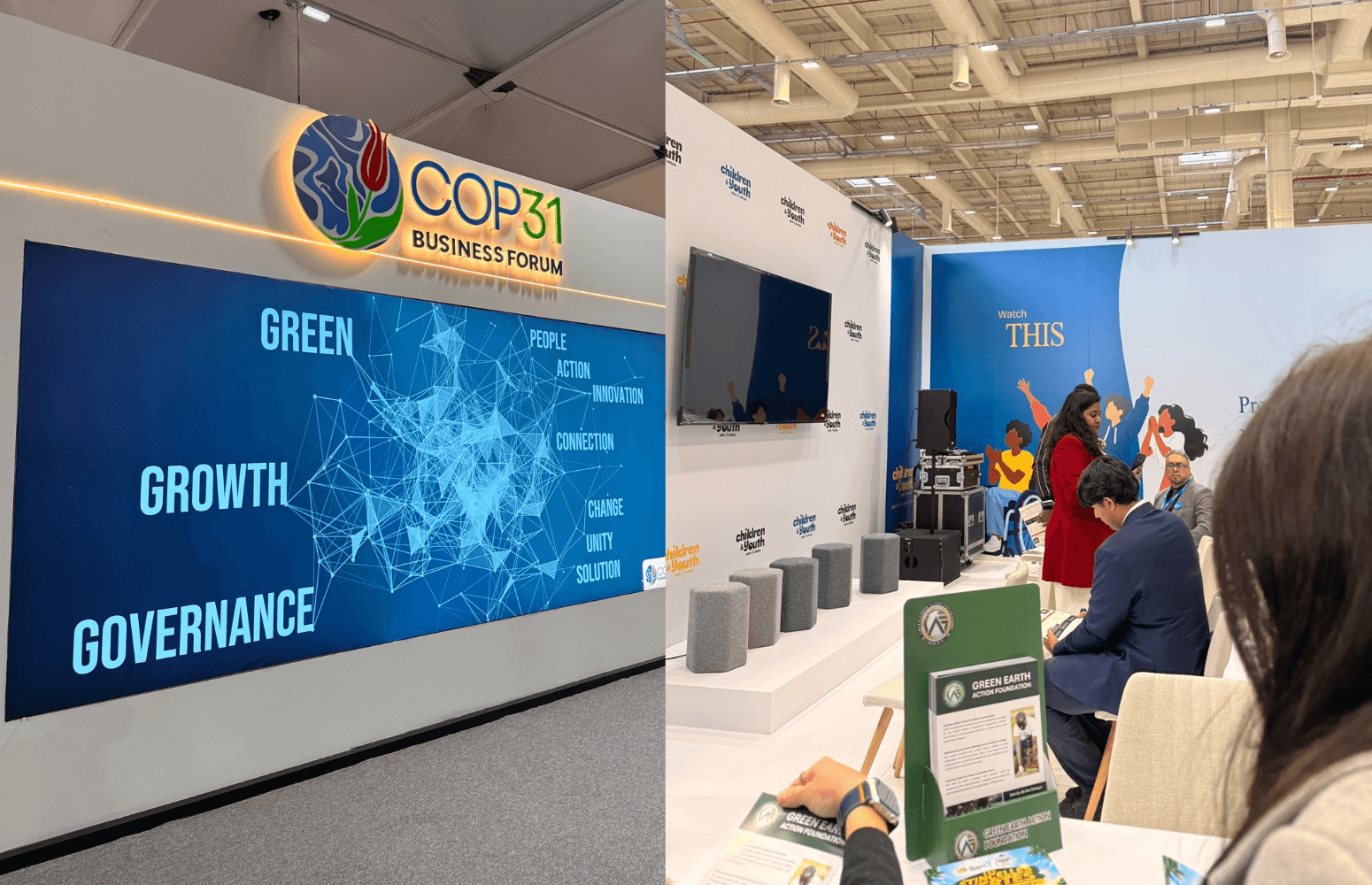
The third phase of ACT for Nature will extend this work into the international climate discussion through GEAF’s planned engagement at COP31 in Antalya, Türkiye, from 9 to 20 November 2026.
.
Under the Transition pillar, GEAF intends to bring forward the ideas and perspectives gathered through the initiative, helping connect community-level experiences with broader discussions on climate action, land restoration and biodiversity protection.
.
This phase reflects the importance of ensuring that international environmental dialogue remains connected to the realities of people working to protect and restore ecosystems on the ground. Local initiatives can offer practical lessons on what works, what remains challenging and what support is needed to sustain progress.
.
The objective is not simply to raise awareness of restoration, but to strengthen the links between knowledge, community action and the decisions that shape environmental policy.
.
From roots to lasting change
The restoration of degraded ecosystems requires more than isolated projects. It depends on long-term commitment, effective partnerships, appropriate financing and the active participation of the communities whose lives and livelihoods are closely connected to nature.
.
ACT for Nature brings these dimensions together through a progression from advocacy to collaboration and transition. By combining expert dialogue with locally led restoration activities and engagement with international climate discussions, the initiative seeks to contribute to a more connected and inclusive approach to environmental action.
.
The challenge remains substantial. But restoration also offers an opportunity to rebuild the natural systems that sustain communities, strengthen resilience and support a more sustainable relationship between people and the environment.
.
Restoring ecosystems means restoring more than landscapes. It means helping to protect the foundations on which communities, livelihoods and future generations depend.
.
Further reading
Explore GEAF’s accompanying post-webinar booklet for a deeper examination of land degradation, drought, soil health, ecosystem restoration, community governance and sustainable financing. Drawing on expert contributions and international research, the publication outlines practical considerations for moving from environmental degradation towards long-term ecological recovery.
.
.
.
.
Share